Category Archives: Web/Tech

Does it Take a Social Media Code of Ethics or is it Plain Obvious?

This is the complete unedited text of an email I received last week. It’s just the latest one. I get a lot of them.

Hi Tim,

I was wondering if you took paid guest posts on your site?  Not a traditional “guest post” but one you’d be compensated for and have complete editorial control over.

I’m part of a business that does high-end brand placements worked into guest posts on a variety of subjects. The posts don’t advocate or review our clients, they are informational and/or newsy.  We include a reference link to our clients amongst other topical links inside the content. We’d provide the article, written by a domain expert, and money for you to review and post it upon your approval.

(If you don’t take guest posts, we also have arrangements where we discuss your upcoming post and find one in which a link makes sense and pay you to include it.)

Is that something that you would be interested in?

I always say no. Do you?

Back in the dinosaur days (1970-71), when I studied Journalism in grad school, they taught ethics in journalism. There was a code of conduct. And It’s still around, if you’re interested. Here’s a quote from the Society of Professional Journalists’ code of ethics:

Journalists should:

—Avoid conflicts of interest, real or perceived.
— Remain free of associations and activities that may compromise integrity or damage credibility.
— Refuse gifts, favors, fees, free travel and special treatment, and shun secondary employment, political involvement, public office and service in community organizations if they compromise journalistic integrity.
— Disclose unavoidable conflicts.
— Be vigilant and courageous about holding those with power accountable.
— Deny favored treatment to advertisers and special interests and resist their pressure to influence news coverage.
— Be wary of sources offering information for favors or money; avoid bidding for news.

I say all non-advertising writing, not just all journalism, should follow that code of ethics. Not just blogs, but all of social media too. Twitter, Facebook, LinkedIn, and Google+: if you get paid to endorse something, say so, or you’re sleazy. Social media is also publishing. And this is just simple right and wrong.

Besides which, if sell yourself like that, then you have no credibility.

What do you think?

I’m Loving the New Version of Business Plan Pro

If you’re a regular reader you know I don’t normally do sales pitches here on this blog, but this is special. Last week Palo Alto Software introduced a brand new version of Business Plan Pro incorporating (finally) my Plan-as-You-Go Business Planning ideas into the mainstream of the software.

With this new version, when you start a new plan, Plan as You Go is the first choice for setting up a simple, practical, management-oriented business plan. Not the whole big formal document plan, but just what you need to run a business with. That’s the key screen above (with my annotations in red):

Now the new built-in option is exactly what I suggested in the book: a streamlined, practical outline, shown here on the right. Of course you can add more later and eventually make a larger business plan, but you do that as the business plan events happen, not before. So you add the embellishment, like description of management team, or exit strategy, only when you need it. Which is great, because a lot of people really don’t need it.

I wrote the book in 2008, but because we’ve been busy with liveplan, the new online web business planning, our mainstream software had to wait. So now I’m celebrating that it’s finally here.

We’ve also added a lot of video at many different points, so that – if you’re online – you get me talking about what you’re looking at, in very short snippets. That’s hard for me to watch, frankly, because I’m as self-conscious as anybody else … but as an author, I love the opportunity to talk to you while you’re working with what I wrote.

This is the 12th version of Business Plan Pro since the first one was published late in 1994, and actually hit the shelves in 1995. We’ve come a long way since the first one – it’s still my business planning advice, but I wrote a third of the code in the original, and now there’s a team of a dozen programmers – which makes it way better.

And, by the way, if you prefer an online version, or you’re a Mac user, there’s also a lot of my methodology and my instructions in the new online planning web app at www.liveplan.com.

For more information click here for the website or call them toll-free at 1 (800) 229-7526.

Q & A: My Advice For Starting Your First Website

I received this question yesterday from the ask-a-question form on my website at timberry.com:

I would like to create website design for my company. What do I need to do?

To start you could search in Google for how to create a website. The good news is that you’ll get good results. The bad news is how many: 89.1 million hits.

So I’m going to add one more? Yes, because you asked me too. And I have a step-by-step suggestion that takes work but not money, and not too much work. In my opinion. And with this you’re forewarned: there are millions of good answers. All of this is just my opinion.

  1. Go to WordPress.com* and sign up as a free user with a new blog. And don’t worry, I’m did understand the question – I’m recommending this as a way to make your first company website, not a blog. But WordPress calls it a blog, regardless; so I use that term here.
  2. Choose a unique name for your blog. Try your company name or something useful for marketing. The WordPress site will give you any unique name you choose followed by “wordpress.com.” For example, Sabrina Parson’s Mommy CEO blog is at mommyceo.wordpress.com.
  3. Choose a theme for your new blog.  WordPress will help you. There are thousands of themes, each of which gives you an already-designed format related to fonts, colors, placement of links and buttons, and so on.  For our purposes, make sure it’s a theme that shows buttons for pages. For an example, just look at the blog you’re reading. The buttons along the top of this blog are related to pages, not posts. Try them. See what I mean.
  4. Now do some pages: if you don’t feel competent writing about yourself or your company, find somebody else you trust to do it. You’ll probably start with an “About” page, and then maybe a general contact page showing your address, phone, and email addresses. You can get wordpress plugins to customize a contact form, but for now, list your email address in text with the @ written out as “at” so web crawlers won’t pick up your email address.
  5. Now, if you’ve followed these steps, you have a company website, having spent maybe two or three hours.

From here, in the now-immortal words of Buzz Lightyear, it’s “infinity and beyond.” You might want your own domain name (like my timberry.com, for example), and you’ll find ways to do that as a WordPress installation too. (timberry.com is hosted at MediaTemple for a little over $200 per year). You’ll be amazed at the variety of WordPress plugins for additional features and functions.

* WordPress is probably the most popular of the blog platforms, and it’s free if you do it like I’ve suggested. But there are many others, several with similar offerings regarded already-designed themes. I’ve also used Blogger (free) and Typepad (for an annual fee) and I like them both.

Disclaimer: Just in case you’re wondering: No, I have no relationship with WordPress, no commissions, no paid endorsements. I use it and I like it. This is free advice. Sad commentary, that these days a recommendation is suspect of ulterior motives. That happens so often that I don’t blame you for wondering.

Let’s All Change the Word Entrepreneur To Empresario

On Monday my friend Robert Jones of Penpoint Group posted 5 reasons we need a new word for entrepreneurs. They were:

  1. It’s French
  2. It’s ridiculously hard to type
  3. It’s not Twitter friendly
  4. It’s been thoroughly bastardized. (mompreneur, solopreneur, and intrapreneur, etc.)
  5. It’s begging for a lawsuit. (from Entrepreneur Magazine)

Page view

The first four are enough for me. I’m ignoring that fifth point because I write for Entrepreneur.com and Entrepreneur Press published my last two books. I like the people there.

So we need a new name for entrepreneur.

Robert suggested venturist on Monday. I commented that it wasn’t catchy enough. Then he suggested venturer in his next post, yesterday, called Kicking Off the Antipreneur Movement. He adds:

I would argue for a term that’s as broad and inclusive as possible. Language adoption relies on usage, and you don’t gain users by excluding people. The best term is one that encompasses all the different varieties of those we currently call ‘entrepreneurs’ — founders and buyers, tinkerers and turnaround artists, profit seekers and social visionaries.
With all those criteria in mind, I wonder if ‘venturer’ might be the term we’re looking for.

And that’s why I like empresario. It’s Spanish, from empresa, which means company. And we’re all getting very familiar with lots of Spanish words that become common in American English. And empresario is easy and fun to say, easy to spell, and, in my opinion, kind of cool.

But it won’t work unless everybody does it. Robert suggested we start using the hashtag #venturer on Twitter instead of #entrepreneur. I think #empresario is even better. What do you think?

Friday Footprints: 5 Good Posts For July 8

First, my thanks to Catharina Belgraver for helping me come up with Friday Footprints, in response to my post here last Friday.

  1. Steve Tobak has a good one on the real secret to personal productivity on BNET. He lists what other people say on this subject, then gets down to his own formula.
  2. I remember a cartoon I saw in 1999. The woman says she’s really looking forward to the new millennium. The man answers “You should; you’re a woman.” Fast forward to Jessica Bennett and Jessie Ellison with Women Will Rule the World on Newsweek.com. This is a very well researched and well written think piece, well worth reading. And it makes a lot of sense.
  3. Evelyn Rusli posted Rejecting Wall Street, Graduates Turn Entrepreneurs Instead on NYTimes’ Dealbook. This is about MBAs becoming entrepreneurs, which is a theme I believe in. I say it’s about time. And maybe I started a trend back in 1983, when I did it.
  4. Ami Groth tracked statistics on the age of startup founders in People Over 35 Have Recently Launched 80% of the Startups on Business Insider. Woman RunningBeing an old guy, I can’t resist quoting this one, at least this paragraph:
    According to the Global Entrepreneurship Monitor, people over the age of 35 made up 80 percent of the total entrepreneurship activity in 2009. That same year, the Kauffman Foundation conducted a survey of 549 startups operating in “high-growth” industries — including aerospace, defense, health care, and computer and electronics — and found that people over 55 are nearly twice as likely to launch startups in these industries.

  5. Alex Rampell posted an excellent analysis of the guts of new marketing in The Power of Pull on TechCrunch.

Also, some calendar items:

  1. I’m going to be live with with Dr. Amy Vanderbilt at 11 AM PDT today on Trend POV at trendpov.com/content.
  2. I’m live with Corrine McElroy Next Wednesday July 13 at 1 pm PDT at www.edgeofchange.com/interview.
  3. I’ve discovered Plancast.com, which lets me post my interview and speaking dates online at plancast.com/timberry. I hope you can join me. I’ll be putting a widget on my sidebar … plancast.com, are you listening? Widgets, maybe?. If you go to that site you can follow me to be able to see my schedule; actually, I think you can see it on that URL whether you follow me or not.
  4. Finally, if you’re an SBDC person and you’re going to the annual conference in San Diego, please join me for a training and certification of my free-for-teachers online curriculum. That’s Sept. 6, the Tuesday before the opening, as part of the “pre-conference.” Please click here for more information on that.

(Image: MrUllmi via Flickr cc)

5 Good Posts for Friday July 1

I need your help: Can you suggest a way to give a theme and a title to a series of Friday posts listing good posts and recommended links I’ve seen from the last week? My title here is too dull. I’m not nearly good enough at titles.

I don’t want to do this every Friday, but this is the fifth time since April 1, so I’m thinking maybe I should make it a repeated theme, with a cool title. Except I don’t have the title.

  • My absolute favorite this week is Megan Berry’s post on Mashable called 7 Tips for Better Twitter Chats. It’s a very good short piece on the step-by-step details of doing a twitter chat. Megan’s marketing manager at Klout (and yes, one of my daughters).
  • Shashi Bellamkonda of Network Solutions, alias the swami of social media, posted 6 Ways to Improve Your Online Content on the Amex OPEN Forum. Shashi knows. He practices what he preaches.
  • The SBA (U.S. Small Business Administration) has an excellent short piece explaining why you need a business plan on SBA.gov. It’s not a blog post published this week, but SBA.gov tweeted it this week, which caught my attention.
  • Fred Cavazza, Why a Facebook Page is Not Enough forbes.com. I caught this one thanks to Becky McRay mentioning it on twitter.
  • The TED blog posted The 20 most-watched TED Talks (so far). How can you resist this best-of-the-best list from the amazing collection at TED.Com. Trivia question answer: TED stands for technology, education, and design.
  • (Aside: yes, I know, this is the sixth, but I can’t resist) Steve King had some fascinating demographics in his Comparing Small Business Owners and High-Growth Entrepreneurs on Small Biz Labs. 

Compare Your Marketing Mix to This Bar Chart

The eloquent bar chart here speaks long and loud about changing the marketing mix. It shows where marketers report their business lead come from. Look at it and tell me what it says about the businesses that aren’t at all online:

I picked this chart out of literally dozens of great charts related to marketing, media, advertising and such offered for free in Hubspot’s Marketing Data Box. I realize I frequently criticize survey results and the conclusions people draw, but I love a whole lot of data condensed into a good-looking chart (like this one) so much that I don’t even want to drill down into the methodologies and poke holes in the conclusions.

What I draw from this chart goes back to the absolute fundamentals with the concept of the marketing mix, with emphasis on the word mix. I don’t think every business should run from everything on the right of this chart over to everything on the left. I think it’s a mix because you’re sending messages to different people using different media, hoping to optimize results from a given unit of resources. I do think you have to take a fresh look at regular intervals, so you change your business plan to keep pace with changes in the business landscape.

When Is a Business Plan Not a Business Plan?

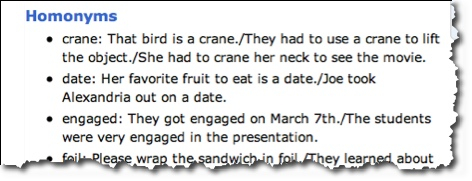
This has been bugging me for a long time now: It turns out that the phrase “business plan” is a homonym, exactly as in these examples from yourdictionary.com:

homonyms

Just like the different meanings for crane and date, there are at least two completely different meanings for the two-word phrase “business plan:”

  1. Business plan: what’s supposed to happen in a business. This normally includes priorities, strategy, assumptions, milestones, responsibilities, sales forecast, expense budget, and cash flow.
  2. Business plan: a document used to summarize a business to serve as part of the process of seeking investors or applying for a commercial loan.

Why does this matter? Because I see both of these two distinct meanings coming up in business conversation all the time, constantly confusing people. For example, when successful entrepreneurs tell pollsters they didn’t have a business plan when they started, they’re using definition #2 here. When smart business advisors play down the use of the business plan, they are also talking about that second definition, not the first.

I’ve been starting to distinguish the two meanings in my own work by writing about “business planning” for business plan definition #1, and “business plan document” for business plan definition #2.

That first-definition business plan is about optimizing management. It includes regular plan vs. actual review, course corrections, and managing rapid change. It doesn’t assume that there’s virtue in sticking to a plan for no other reason. It lives on your computer. The slide deck, the pitch, and the document are output of that plan. It’s Plan-As-You-Go business planning.

The second-definition business plan is something like sales collateral; it’s business goal is communicating a deal to investors, or supporting a loan application. It’s important to a subset of businesses that are seeking investment or commercial loans. I see a lot of those in my work as a member of an angel investment group and a frequent judge at business plan contests.

These are very different things, these two definitions of business plan. They are homonyms. And that confuses business discussions about business plans and business planning. Do you agree?

Folk Wisdom Reversal: Necessity Isn’t the Mother of Invention

This will be hard for anybody under 50 to believe, but there was a time when word processing and spreadsheets were a real productivity advantage.

Are you old enough to remember Visicalc, or maybe SuperCalc? In the very early 1980s, most business people still did budgets with paper and calculator. The spreadsheet power user was way faster than anybody else. It was a great secret weapon for early adopters. It was a huge productivity boost.

Now, of course, we take it for granted. People throw multi-worksheet budgets around like nerf balls. If you’re not done in an hour, well, what’s wrong with you?

It was the same back then with word processing. Are you old enough to remember WordStar? That was power when the competition was working with typewriters. Now, you write fast … so what? So does everybody. Go write your big email and come back in 10 minutes.

Then came desktop publishing in 1985. Can you remember Aldus Pagemaker and the first Apple Laserwriter. It was amazing. Any one person could compete with the graphics department.

And slides? There was Aldus Persuasion, replaced later by Microsoft PowerPoint. When I was with McKinsey Management Consulting back in the early 1980s our office had more graphic artists than consultants, because they had to produce the slides that amazed the clients. How long has it been since anybody was amazed by a slide deck?

Do you see what I mean? At first it’s slick and powerful, doing something way faster than the old way of doing it. And that’s productivity at its best. But soon the advances are taken for granted. The bar of expectations goes up, and you spend the same amount of time.

Which is why the saying is reversed. In these cases, it’s not like it’s supposed to be, necessity as the mother of invention. Invention becomes the mother of necessity.

Does All Of This Improve Productivity?

That’s an interesting question. Ten years ago I would have been tempted to say no, that it hasn’t improved productivity.  More recently I’ve changed my mind.  Running a company makes me sure that we benefit from the power of more detailed budgeting, and running through the daily process of management makes me pretty sure that business documents are generally better communicators with desktop publishing than without.

And the new world of social media, infinite communications possibilities, authenticity and content quality threatening to become more powerful than huge advertising budgets?

What do you think?

(Image: JuditK/Flickr cc)

The Brand New SBA iPhone App is Released

I try not to talk about my company or its products too often on this blog, not because I’m not proud of both, but because a little bit of that goes a very long way.

Still, today, I’m proud to post here about the release of the Small Business Administration (SBA) new SBA iPhone app, shown here. It was developed by Palo Alto Software as a donation to the SBA, our way of trying to help small business. SBA Administrator Karen Mills called it

… another example of the steps we are taking to do a better job of connecting entrepreneurs and small business owners with the tools to help them start or grow their businesses and create jobs.

(You can click on the image to go to the iTunes download page)

The mobile app will help users connect with SBA district office staff and SBA-affiliated counselors and mentors who can provide free, personalized small business assistance. The user-friendly format of the app will help answer questions such as: How do I start a business? Where can I go in my area to get free help with writing a business plan? And where do I begin finding funding for my business?

The SBA mobile app also features a built-in startup cost calculator to help estimate the costs associated with getting a business off the ground, plus an SBA partner locator to help users find SBA offices, Small Business Development Centers, Women’s Business Centers and SCORE.

We’ve been working with the SBA for more than 15 years, through three presidential administrations. One constant there is a lot of people working hard to promote small business through not just the well-known loan programs, but education, information, and a whole lot of problem solving in the front lines. The sba.gov website, with a clean new look introduced less than six months ago, is still the first line of information on small business in this country. And I’m personally very happy to say so.