Oh dear. Those nasty activists. It looked at first like PR gone bad. me thinking it was dumb of Shell Oil to send a press release huffing and puffing about “activists” making fun of it.  It looked like a press release. Curse you, activists! And like that. Shell is supposedly considering suing. The press release says:
“These people have gone to great lengths to mislead the public about the age and reliability of our Arctic vessels, and otherwise damage Shell’s credibility,” said Smith. “Shell can obviously not allow this sort of misinformation to proliferate, and we are taking the firmest legal measures against the perpetrators of this campaign.”
It talks about an evil social media campaign using the hashtag #shellfail and other supposed sins. It also links to the offending website, arcticready.com.
So I went to visit the website, which is serious spoof. How clever of these “activists,” I thought, and how dumb of Shell Oil. And a nice spoof, even a collection of funny ads and a make-an-add game going on too.
But there’s the rub. I went back to the press release to discover that the email with the supposed press release is also a spoof, by the same activists. So Shell’s not as dumb as this campaign makes it look. But, on the other hand, the campaign is smart, clever, and effective. Brave new world.
Here’s a picture of the email press release supposedly from Shell Oil:
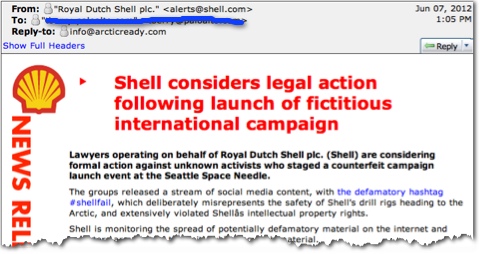
I can’t work up any sympathy at all for an oil company drilling in the arctic. But also, wow, these are very effective tactics. No?
 And management consultants, planning consultants, strategy consultants, marketing consultants, public relations consultants, etc. And designers and programmers, project managers, event planners, graphic artists … I’ve been both seller and buyer, and I’m thinking I can help you figure out which section to go to, and which cage to rattle, by sorting through some of the species, and some of the differences.
 It’s not an idle question. I’m not trying to make trouble. It’s just that I think this happens a lot. I think it’s a natural result of efforts to generate more business and new business.
 How would I know? I’ve been on both sides of this table. In the 70s I read press releases as a foreign correspondent for UPI and Business Week and others. In the 80s I read them as a monthly columnist for a software magazine. Then I became client of PR, company president, paying for press releases. Now I’m writing again, monthly columns in several publications, and this and other blogs, so I’m reading them again.
You must be logged in to post a comment.